







BACK & LAY
Take either side of any market.
BET AGAINST OTHER PLAYERS, NOT THE HOUSE. Activate in two minutes on WhatsApp with a ₹100 minimum UPI deposit.
Instant WhatsApp Onboarding & Login Desk: 8626043284 · Message on WhatsApp
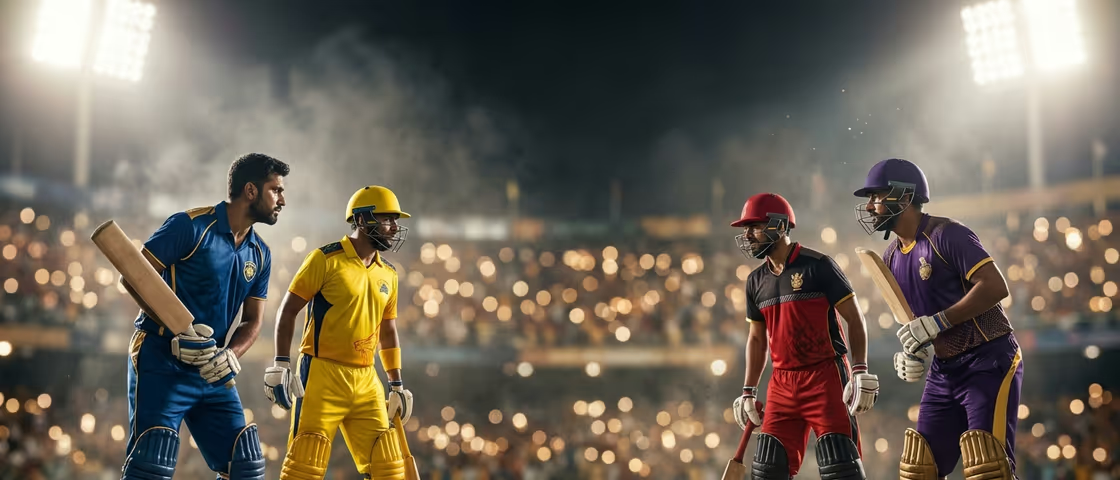

Stylised franchise colourway shield approximations (unofficial editorial illustrations for market navigation).

Opening a cricket exchange id gives you direct access to a peer-to-peer order book where you trade match odds, session runs, and fancy lines against other punters instead of taking shaded prices from a fixed-odds house clerk. You can activate your login on WhatsApp via https://walink.me/pl99win or by calling 8626043284 in 2 minutes with a ₹100 minimum UPI deposit.
I made the switch from local bookmaker accounts to an exchange back in April 2022 during a humid Mumbai Indians night game when my old khaiwal refused to take a hedged lay on the seventeenth over. My phone screen had a hairline crack near the bottom corner, the bedroom Wi-Fi kept dropping to one bar, and watching a fixed book lock its screen for four straight balls while the required run rate climbed cost me my entire evening stake. Once you understand how the blue back boxes and pink lay boxes clear orders on an exchange ladder, you stop donating house margin on every single ball.
A peer-to-peer betting account connects you to an electronic matching engine where every price on the screen is posted by another human trader instead of a corporate risk desk. When you log into a traditional sportsbook, the operator sets a single price on Mumbai Indians, pads that price with a 6% to 9% overround margin, and hopes your ticket loses so the house keeps your stake.
On a cricket exchange, the platform never takes directional risk on whether Rohit Sharma hits a fifty or whether Chennai Super Kings defend 182 at MA Chidambaram Stadium. The platform simply holds the escrow ledger for both players, pairs a punter who wants to back an outcome with another punter who wants to lay that exact outcome, and deducts a small market base rate commission on the winner net profit at settlement.
Because the house is not gambling against your slip, nobody restricts your account when you string together five winning IPL nights in a row. Traditional bookmakers routinely cut sharp accounts down to ₹200 maximum stakes the moment you beat their closing line. An exchange welcomes your volume in the order book because your rupee stake creates liquidity depth for the next trader waiting in the queue.
Many long-time Indian players who started on classic portals like 99game.co or checked match cards on 24bettingclub.com and cricbet99.cloud eventually move their main match-odds bankroll onto a dedicated cricket exchange id for two practical reasons: you get access to both sides of the market (khayi and lagai in one tap), and you can exit a trade mid-over without begging a WhatsApp agent for a manual loss-cut quote.
Every market on the order book works like a live stock ticker split into two colour-coded columns: sky-blue boxes on the left for backing and rose-pink boxes on the right for laying. Below each decimal price sits a smaller rupee figure showing the exact liquidity waiting to be matched at that specific tick right now.
Backing a selection means betting that the event will happen, which is the familiar lagai bet every punter knows. If you tap the blue box on Royal Challengers Bengaluru at decimal odds of 1.90 and enter a ₹1,000 stake, you are asking to win ₹900 in clear profit if Bengaluru win the match, plus your ₹1,000 stake returned.
Laying a selection is the khayi side of the book, where you step into the shoes of the bookmaker and bet that the selection will not win. When you tap the pink lay box on Royal Challengers Bengaluru at 1.90 for a ₹1,000 backer stake, you win that ₹1,000 if Kolkata Knight Riders win, or if the match ends in an unsplit tie under standard rules.
The matching engine pairs those two slips automatically across the country. While you sit on a noisy evening bus in Pune tapping the blue 1.90 box for ₹1,000, another punter sitting in Ahmedabad or Jaipur is tapping the pink 1.90 lay box for ₹1,000 because he thinks the pitch at M. Chinnaswamy Stadium is slowing down. Neither of you knows the other person name, yet the engine locks both wallets in under fifty milliseconds and marks the order as matched.
What if you think 1.90 is too skinny and you want 1.95 on Bengaluru? On a bookmaker app, you can only take the price shown or walk away. On an exchange, you type 1.95 into the odds box and hit submit. Your order sits at the top of the pink lay queue offering 1.95 to the rest of the market, and the moment two dot balls push the live bhav up by five ticks, your requested price fills automatically.
Liability is the exact maximum rupee amount you can lose on a lay bet if the team you laid goes on to win the match. Formula: Liability = Backer Stake × (Decimal Lay Odds - 1).
Look at two concrete numbers before you ever touch a pink box. First, suppose you lay Mumbai Indians for a ₹500 backer stake at decimal odds of 2.00. Using the formula, your liability is ₹500 × (2.00 - 1) = ₹500. That means a ₹500 lay at 2.00 risks ₹500 of your wallet balance to win ₹500 from the backer if Mumbai Indians lose.
Second, suppose a heavy favourite is trading at 1.50 after a fast powerplay start. If you lay that favourite for a ₹500 backer stake at 1.50, your liability is ₹500 × (1.50 - 1) = ₹250. A lay at 1.50 risks only ₹250 of your balance to win ₹500 if the favourite stumbles. That is why veteran Indian traders prefer laying short-priced teams at 1.35 to 1.55 instead of backing the underdog on a high-margin sportsbook: your downside exposure is half the size of your potential reward.
Warning: On a lay bet at decimal odds above 2.00, you can lose more than the stake number you type into the slip, and exchange accounts can go negative or exhaust their entire exposure limit if you do not watch the liability figure before tapping confirm. If you lay an underdog at odds of 4.50 for a ₹500 stake, your liability is ₹1,750. Always read the red liability preview line on the bet slip before you submit.
Because every rupee on an exchange comes from another real punter, your bet only matches to the depth available at that price tick. Suppose you want to back Sunrisers Hyderabad at 2.12 for ₹2,000, but the small number underneath the 2.12 blue box shows only ₹1,200 waiting in the queue.
The moment you submit your slip, the matching engine fills ₹1,200 immediately at 2.12 and leaves the remaining ₹800 sitting in your open orders panel as an unmatched bet. That ₹1,200 matched portion is locked into the ledger and cannot be cancelled, though you can trade out of it at any moment by laying Sunrisers Hyderabad.
For the ₹800 unmatched portion, you have two clear options on your screen. You can tap the red cancel icon next to the unmatched row to pull that ₹800 straight back into your available wallet balance in half a second, or you can toggle the Keep In Play switch so the order stays on the ladder waiting for another trader to match it during the next over. If you do not select Keep In Play on a pre-match order, the exchange automatically cancels any unmatched remainder the second the umpire calls play for the first ball.
One small friction point catches new mobile users during high-speed T20 overs: if you leave a partly matched order sitting open while a bowler is halfway down his run-up and the batter edges behind to the keeper, the market suspends and cancels unprotected unmatched orders to protect you from being picked off on a dead price. Get in the habit of checking the Matched vs Unmatched tab right below the ladder after every order so you never assume a full ₹2,000 position is active when only ₹1,200 actually filled.
Bookmakers build their profit margin directly into the odds by squeezing both teams downward, a mechanism called the overround. In an even IPL contest between Gujarat Titans and Delhi Capitals at Narendra Modi Stadium, a fair fifty-fifty coin toss equals decimal odds of 2.00 on each side. A typical fixed-odds bookmaker posts 1.87 on Gujarat Titans and 1.87 on Delhi Capitals, charging you a hidden 6.9% house edge before a single ball is bowled.
Look at the exact same fixture on an exchange order book five minutes before the toss. You will routinely see Gujarat Titans trading at 1.99 to back and 2.00 to lay, while Delhi Capitals sit at 2.00 to back and 2.01 to lay. The total market overround across the top of the book is between 0.5% and 1.2%.
Where the price gap becomes even wider is on third-favourite and underdog lines during a run chase. When a chasing side needs 48 runs off the last 24 balls with six wickets in hand, a traditional bookmaker widens its defensive spread and offers 2.45 when the true mathematical probability sits near 2.85. On an exchange ladder, hundreds of independent punters compete to get matched, pushing the blue back price up to 2.82 and the pink lay price to 2.86.
Even after you pay a 2% or 3% commission strictly on your net winning markets, your take-home rupee return over fifty IPL matches is 12% to 18% higher than on a fixed-odds sportsbook. When you trade in-play four or five times during an innings, that tight one-tick spread is the difference between finishing the tournament in profit and bleeding out to bookmaker vig.
Setting up your account does not involve multi-page web forms or waiting two days for an email activation link that lands in spam. Follow these four steps with our verification desk at 8626043284 to go from zero to a live order book in under two minutes:
We keep the opening deposit at ₹100 so you can test the matching engine with real rupees instead of risking five thousand rupees on an unfamiliar interface. Creating the login credentials costs ₹0, and every single rupee of your ₹100 UPI transfer goes straight into your playable wallet ledger.
We also enforce a strict zero-bonus policy across every account. You will never see welcome match banners, deposit percentages, cashback schemes, promo codes, or free bet tokens here. When a site promises bonus chips, it locks your real deposit behind hidden rollover terms and blocks your withdrawal when you win. With our ₹100 deposit, your money stays liquid: place one trade, close your book, and withdraw your balance to UPI whenever you want.
A ₹100 balance is enough to place two ₹50 back bets on an IPL match-odds market or practice laying a heavy favourite at 1.25 where your liability is only ₹25 for a ₹100 backer stake. Once you have watched a live bet match, cancelled an unmatched order on the ladder, and timed a test UPI withdrawal to your own bank account, you can decide how much working capital you actually want to keep in play.
The first time you open an in-play cricket exchange market during a tight chase at Eden Gardens, the flashing blue and pink boxes can feel like an airport departure board during a monsoon delay. Take ten seconds to read the three horizontal boxes on either side of the centre line before you touch a rupee.
The centre gap between the highest blue back price and the lowest pink lay price is the market spread. In a liquid IPL match between Kolkata Knight Riders and Rajasthan Royals, the three blue back boxes on Kolkata might read 1.82, 1.83, and 1.84 from left to right, while the three pink lay boxes read 1.85, 1.86, and 1.87. The innermost boxes (1.84 blue and 1.85 pink) are the best current market prices, separated by just one tick.
Look closely at the smaller rupee numbers printed inside each box. If the blue 1.84 box shows ₹45,000 and the pink 1.85 box shows ₹1,80,000, heavy lay money is pressing down on Kolkata price, which often signals that stadium traders expect the price to drift out to 1.86 or 1.87 on the next dot ball. Reading that queue imbalance gives you a ten-second warning before the price ticks up or down.
Every time a bowler runs in and delivers a dot ball or a batter skies a catch, the exchange flashes a red SUSPENDED banner for two to four seconds while the order book resets and sweeps out unprotected prices. Do not mash the submit button when the screen is suspended. Wait for the market to reopen and let the one-tick spread settle for three seconds before placing your order, because post-wicket prices frequently overshoot by ten to fifteen ticks before snapping back.
Greening up is the single biggest advantage of holding a cricket exchange id instead of a traditional bookmaker slip. Instead of sweating out the twentieth over praying a yorker does not go for six, you use the opposite side of the ladder to lock in guaranteed profit across both teams while the match is still in the fourteenth or fifteenth over.
Walk through the exact arithmetic from a real Wankhede Stadium chase. Before the toss, you back Mumbai Indians at decimal odds of 2.40 with a ₹1,000 stake. If Mumbai win, you stand to make +₹1,400 profit. If Chennai Super Kings win, you lose -₹1,000.
Suryakumar Yadav and Hardik Pandya smash 68 runs off the powerplay, and Mumbai Indians shorten from 2.40 down to 1.60 on the pink lay box. To calculate the exact hedge lay stake that equalizes your profit across both outcomes, divide your potential return (₹1,000 × 2.40 = ₹2,400) by the current lay odds (1.60), which gives a lay stake of ₹1,500. You tap the pink 1.60 lay box on Mumbai Indians and enter ₹1,500, which carries a lay liability of ₹1,500 × (1.60 - 1) = ₹900.
Look at your net book across both possible match outcomes now:
Both teams now display green +₹500 figures under their names on your ladder (minus the small 2% to 3% commission on that ₹500 net profit). You can switch off the television in the twelfth over, go to sleep, and collect the same payout no matter who wins in a super over. When odds move against your opening position and you use the same formula to cap a smaller equal loss across both teams instead of losing your whole stake, Indian exchange traders call that loss cut or red-booking out.
While match odds follow decimal pricing from 1.01 to 1000, Indian exchange accounts also carry a dedicated session and fancy book for 6-over powerplay runs, 10-over totals, 15-over scores, 20-over full innings lambi pari, individual batter milestones for Shubman Gill, Yashasvi Jaiswal, Rishabh Pant, KL Rahul, or Sanju Samson, fall of next wicket, and over-by-over boundaries.
Session fancy lines are quoted in the classic Indian No / Yes two-number bracket (khayi-lagai run lines) such as 48 / 50 for the 6-over powerplay at Arun Jaitley Stadium, alongside a rate counter like 100/100 (even money). Tapping the pink No (48) box for ₹500 means you win ₹500 if the batting team scores 47 runs or fewer in the first six overs, and if they reach 48 or more, you lose ₹500. Tapping the blue Yes (50) box for ₹500 means you need the team to reach 50 runs or more to collect ₹500.
Pay attention to the price counter underneath the run number too. Occasionally a line will read 52 No (90) / 53 Yes (110). That means laying 52 No for a ₹500 unit risks only ₹450 (90% of stake) to win ₹500, whereas backing 53 Yes for ₹500 pays ₹550 (110% of stake) if the batting side reaches 53 runs.
The smartest way to trade session fancy on an exchange is to hunt the middle corridor. If you take Yes at 46 early in the powerplay before Abhishek Sharma hits three fours in the second over, the line jumps to 53 / 55. You can then take No at 53 for the same ₹500 stake. Now any 6-over score below 46 or above 53 leaves you completely break-even, and if the batting side finishes on 46, 47, 48, 49, 50, 51, or 52 runs, you win both sides of the book and collect +₹1,000 with zero risk left on the table.
Liquidity is the fuel that makes exchange trading work. On a flagship IPL evening clash between Royal Challengers Bengaluru and Mumbai Indians, or an ICC T20 World Cup fixture featuring Virat Kohli, Jasprit Bumrah, and Pat Cummins, millions of rupees sit queued on every single price tick from 1.50 to 2.50. You can fire in a ₹10,000 back or lay order and watch the matching engine fill the entire amount at one price without moving the ladder by a single tick.
Compare that with a Tuesday morning domestic Ranji Trophy session or a low-tier club T10 fixture where total matched turnover is tiny. The blue back box might sit at 1.65 while the pink lay box sits all the way out at 1.92, with only ₹300 available on either side.
If you enter a large stake into a thin market, you suffer slippage on entry and you cannot exit cleanly when the match turns because nobody is sitting on the other side of the book to take your hedge. Stick to high-liquidity competitions regulated by the BCCI and ICC (Indian Premier League, WPL, T20 World Cup, ODI World Cup, Big Bash, and top international Test series) whenever you intend to scalp or green up mid-innings.
New punters often worry that placing eight or ten back and lay trades during a single T20 innings will rack up ten separate commission charges. That is not how exchange accounting works.
Commission is charged strictly on your net market winnings after the fixture settles, never on individual trade turnover and never on losing markets. Look at two examples on a 3% market base rate:
Each market settles independently on your ledger. Your Match Odds book settles as one market, and each individual 6-over or 20-over session fancy settles as its own discrete market. Unlike corporate international exchanges that hit consistent winners with 20% to 40% lifetime premium charges, accounts issued through our WhatsApp desk at 8626043284 operate on a flat, predictable commission structure with zero hidden deductions.
Every rupee moving in and out of your exchange wallet runs on Indian domestic banking rails powered by NPCI: UPI, Google Pay, PhonePe, Paytm, BHIM, IMPS, and NEFT. You never have to convert INR into foreign currency or pay card gateway cash-advance fees.
For deposits, message 8626043284 on WhatsApp via https://walink.me/pl99win to request the current active merchant UPI ID, send your transfer (minimum ₹100), and paste the screenshot showing the 12-digit UTR number. Wallet updates clear in 60 to 120 seconds.
For withdrawals, message the same desk at 8626043284 with the rupee amount you want to pull out and your registered UPI ID or bank IFSC details. Standard daytime payouts land in your bank account in 10 to 25 minutes. If you request a payout at 11:25 PM right after Travis Head or Heinrich Klaasen finishes an IPL run chase, expect a realistic 15 to 35 minute queue while the settlement ledger processes thousands of concurrent UTR payouts. Because we never attach deposit bonuses to your wallet, there is zero rollover requirement blocking you from withdrawing your initial deposit or profit at any time.
Online betting is permitted for Indian players in most jurisdictions under the broad reading of the Public Gambling Act of 1867 (which was drafted to regulate physical bricks-and-mortar gaming houses) alongside state skill-gaming rules, while Goa, Sikkim, Nagaland, and Daman maintain dedicated statutory licensing frameworks. Because individual states hold constitutional authority over betting and gaming under List II of the Seventh Schedule, several states such as Telangana, Andhra Pradesh, and Tamil Nadu have enacted specific local laws restricting online real-money play within their state borders. You must be 18+ and check the rules applicable in your state of residence before funding an account.
On the tax side, deposits into your exchange wallet are not taxed at source. Under Section 115BB of the Income Tax Act, net winnings from online gaming and wagering are taxable as income at the statutory flat rate and are self-reported by the player on their annual income tax return. Keep a simple ledger of your opening UPI transfers and closing IMPS or UPI withdrawals across the IPL season so your net figure is always documented cleanly.
On the KYC side, opening a cricket exchange id with a ₹100 UPI deposit only requires phone number OTP confirmation on WhatsApp at 8626043284 and matching ownership between your sending and receiving UPI handle. If you request a large bank transfer or need the cashier to trace a delayed bank UTR, our compliance team may ask to verify the name on your PAN or Aadhaar card solely to prevent third-party account takeovers. We also support immediate self-exclusion and deposit cooling-off limits whenever you message the desk.
Moving from a fixed-odds bookmaker to a live exchange ladder gives you sharper tools, and it also exposes bad habits fast. Avoid these six classic errors during your first week on the order book:
Use the table below to compare how a dedicated cricket exchange id stacks up against global exchange models (Betfair Exchange, Matchbook, Smarkets, Betdaq) and traditional Indian fixed-odds bookmaker accounts across pricing, risk mechanics, and INR banking rails:
| Feature / Mechanic | Cricket Exchange ID (cricket-exchange-id.com) | Global Exchanges (Betfair / Matchbook / Smarkets / Betdaq) | Traditional Fixed-Odds Bookmaker ID |
|---|---|---|---|
| Counterparty Model | Peer-to-peer order book (punters match punters) | Peer-to-peer order book | You bet directly against the house risk desk |
| Typical IPL Match Odds Margin | 0.5% to 1.5% two-way spread | 0.5% to 1.5% spread | 6.0% to 9.0% built-in house overround |
| Back & Lay Capability | Full Blue (Back) & Pink (Lay) ladder + custom price requests | Back & Lay ladder | Back only (or heavily shaded manual khayi rates) |
| In-Play Green Up / Trade Out | 1-tap automated green book calculation at true market odds | Automated cash-out / hedge on ladder | House cash-out button deducts an extra 8% to 12% margin |
| Winning Account Restrictions | None: winners add liquidity to the matching engine | None on stakes, but up to 40% premium charge on Betfair | Winning players routinely limited to ₹200 max stakes |
| Indian Session Fancy (6/10/20 Overs) | Full No/Yes run ladders, lambi pari, and batter fancy | Limited decimal over/under lines only | Available, but with wider 2-to-3 run house brackets |
| Minimum Deposit & Currency | ₹100 INR via UPI, GPay, PhonePe, Paytm, IMPS | Foreign currency and e-wallet barriers for Indian residents | Usually ₹500 to ₹1,000 minimum with bonus rollover locks |
| Onboarding & Support Speed | 2 minutes on WhatsApp at 8626043284 (24/7 human desk) | Multi-day document upload queue and email tickets | Varies by local agent availability |
Every answer below opens with a direct standalone explanation so you can verify the exact rule on lay liability, commission, partly matched slips, or UPI payouts in seconds:
A cricket exchange ID is a personal login account that connects you to a peer-to-peer cricket betting order book where you trade odds against other punters instead of a house bookmaker. With one account, you can back a selection to happen, lay a selection to lose, set your own price on the ladder, and close positions mid-match across IPL, T20, ODI, and Test fixtures.
You get your login credentials by messaging our verification desk on WhatsApp via https://walink.me/pl99win or calling 8626043284, confirming you are 18 or older, and sending a ₹100 minimum UPI deposit. Once your UTR number clears from Google Pay, PhonePe, or Paytm, the desk issues your username, password, and active login link inside two minutes.
Lay betting means acting as the bookmaker by betting that a team, batter, or session outcome will not win, so you collect the backer stake when that selection loses. For example, if you lay Mumbai Indians at 2.00 for a ₹500 backer stake, you win ₹500 if Chennai Super Kings win, and you pay ₹500 liability if Mumbai win.
An exchange matches your bet through an automated electronic matching engine that pairs your back order with an opposing lay order at the exact same decimal price and rupee stake. If a counterparty is already offering your requested price in the queue, your slip fills in milliseconds, and if you ask for a higher price, your order waits in the book until someone takes it.
An exchange is better than a traditional bookmaker for price-sensitive punters because exchange match odds carry a 1% to 1.5% overround compared with the 6% to 9% margin built into fixed-odds books. You also gain the ability to lay outcomes, trade out before the final over, and keep winning without having your maximum stake cut by risk clerks.
Online exchange play sits outside the physical gaming house rules of the Public Gambling Act 1867 in most Indian states, while Goa, Sikkim, Nagaland, and Daman operate specific licensing frameworks. Several states restrict online real-money play under local statutes, deposits carry no tax at source, and net annual winnings are taxable income that players self-report.
Liability is the exact maximum rupee amount locked from your exchange balance that you will lose if a lay bet goes against you and the selection actually wins. It is calculated as Backer Stake multiplied by Decimal Odds minus 1, so a ₹500 lay at 2.00 locks ₹500 liability, whereas a ₹500 lay at 1.50 locks ₹250 liability.
When your bet is only partly matched, the matched portion immediately goes live at the agreed odds while the unmatched remainder sits in the order queue waiting for another counterparty. You can cancel that unmatched remainder with one tap to free up your balance, or leave it in the queue until the next delivery is bowled.
Yes, you can cancel any unmatched bet or the unmatched portion of a partly matched bet at any second before another player takes your price on the ladder. The moment you tap cancel, the locked stake or lay liability returns to your available exchange wallet balance with zero fee or penalty.
Greening up, also called trading out or creating a green book, means placing an opposite back or lay trade after the odds move so you lock in an equal profit regardless of who wins. If you back a team at 2.40 and lay them later at 1.60 with adjusted stakes, both runners show positive green numbers on your screen before the match ends.
Yes, you can open and close positions across all twenty overs of an IPL innings whenever the market is open and not temporarily suspended for a wicket, boundary, or DRS review. Most active exchange traders exit their match-odds positions during the fifteenth to seventeenth overs instead of riding coin-flip final overs.
Exchanges charge a small market base rate commission, typically between 2% and 5%, calculated strictly on your net winning profit in a settled market instead of every individual trade. If you place ten back and lay trades in one match and finish with a net loss or break-even book, you pay zero commission on that market.
The minimum deposit to activate and fund your account is ₹100 via UPI, Google Pay, PhonePe, Paytm, or BHIM. Starting with ₹100 lets you test live order-book execution, verify how unmatched orders cancel, and run a quick UPI withdrawal test before moving larger match bankrolls.
Your login account itself costs nothing to issue, with zero registration fee, zero software charge, and zero monthly maintenance deduction from our WhatsApp desk at 8626043284. Every rupee of your ₹100 minimum opening transfer goes directly into your playable wallet balance as ledger credit for backing and laying.
Yes, account creation and credential setup are completely free of registration charges when you message https://walink.me/pl99win or call 8626043284. To move from a view-only screen to placing live orders on the matching engine, you simply fund your own wallet with the ₹100 minimum UPI deposit.
Liquidity is the total rupee volume sitting in the blue back and pink lay queues at each price tick, and it determines how much stake you can match without moving the odds against yourself. Deep liquidity gives you tight one-tick spreads and instant fills, whereas thin liquidity causes wide gaps and partly matched slips.
Match Odds on marquee IPL fixtures featuring Mumbai Indians, Chennai Super Kings, Royal Challengers Bengaluru, and Kolkata Knight Riders attract the deepest liquidity, followed closely by 6-over powerplay session runs and 20-over innings lambi totals. Side markets like top bowler or most sixes carry noticeably thinner queues until the toss is completed.
If a cricket match is abandoned due to rain without a single ball bowled, or before the minimum overs required for an official result under market rules, all match-odds bets are voided and every rupee of stake and liability returns to your balance. Completed session fancy markets that already settled before the rain stoppage remain valid and paid.
Yes, you can withdraw your settled balance directly to the same UPI ID, Google Pay, PhonePe, Paytm, or bank account via IMPS and NEFT by messaging the desk on WhatsApp at 8626043284. Keeping your deposit and withdrawal rail matched to the same verified account prevents banking bottlenecks after late-night IPL matches.
Standard UPI and IMPS withdrawals clear within 10 to 25 minutes during regular hours, and within 15 to 35 minutes during peak post-match traffic around 11:30 PM IST after an IPL night game finishes. We do not impose artificial rollover locks because we operate with zero deposit bonuses.
Initial onboarding for a ₹100 UPI deposit requires basic mobile number OTP verification and matching payment rail ownership so payouts go to the right person. For high-value withdrawals or disputed bank UTR traces, the compliance desk may request a basic PAN or Aadhaar name check to prevent third-party fraud and protect your ledger.
On a back bet you can never lose more than your stake, but on a lay bet at decimal odds above 2.00 your liability is larger than the backer stake you are trying to win. Laying ₹500 at odds of 4.00 risks ₹1,500 of your balance, and your account only stays protected when you check the exact liability figure before confirming the slip.
Trading on a cricket exchange does not magically turn bad match reads into profit, and laying long-shot prices without checking your red liability figure will punish an undisciplined wallet just as fast as any bookmaker. What a cricket exchange id gives you is a level playing field: a 1% spread instead of an 8% house tax, the ability to lay a team you think is overrated at 1.55, and the freedom to green up your book in the fourteenth over when Jasprit Bumrah or Rashid Khan comes back into the attack.
Start small with the ₹100 minimum UPI deposit, test how an unmatched order cancels on the ladder, and run a withdrawal back to your own PhonePe or Google Pay account before the next big toss. Message our 24/7 desk at https://walink.me/pl99win or call 8626043284 whenever you are ready to open your login.

Start with ₹100 on UPI · Two-minute WhatsApp setup · Phone: 8626043284